
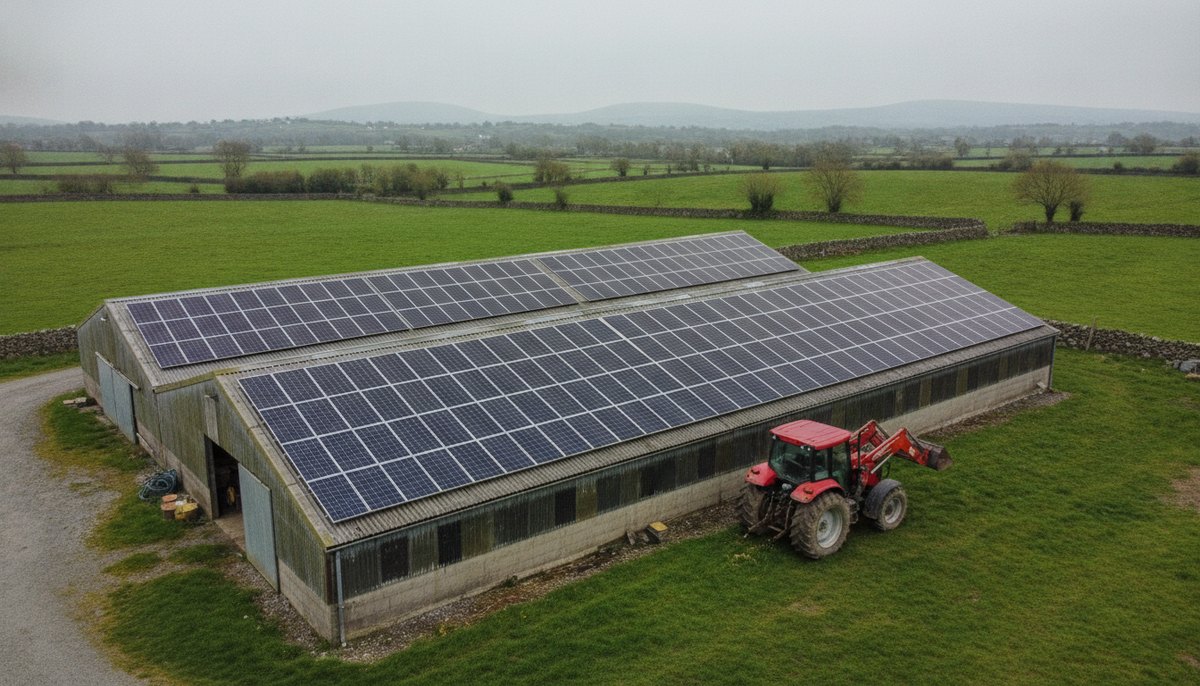
The TAMS solar grant pays Irish farmers 60% of the cost of a solar PV system through the Solar Capital Investment Scheme (SCIS) under TAMS 3 — with a ring-fenced €90,000 investment ceiling, systems up to 62 kWp, and battery storage included. It is run by the Department of Agriculture, Food and the Marine (DAFM), not the SEAI, and it is a separate pot from the residential solar grant homeowners use. If you have a herd number and a farm holding, this is the scheme that funds panels on your sheds and outbuildings — and at 60% it is one of the most generous capital supports in Irish farming.
- Grant rate: 60% of the reference cost — the same enhanced rate for every eligible farmer (there is no separate higher rate for young farmers under this scheme).
- Investment ceiling: €90,000, ring-fenced for solar — so a 60% grant of up to €54,000, on top of your other TAMS 3 ceiling.
- System size: eligible up to 62 kWp.
- Battery storage: grant-aided at the same 60%, capped at 50% of the installed panel capacity.
- Who runs it: the Department of Agriculture (DAFM) — applications through your agfood.ie account, not the SEAI.
- The catch: the system is sized for on-farm use, not for selling power to the grid — TAMS is about cutting your farm's electricity bill.
What Is the TAMS Solar Grant?
"TAMS" is the Targeted Agricultural Modernisation Scheme, the Department of Agriculture's main capital grant programme for on-farm investment. The current phase, TAMS 3, runs under Ireland's CAP Strategic Plan and includes a dedicated solar measure: the Solar Capital Investment Scheme (SCIS). When farmers talk about "the TAMS solar grant", this is what they mean.
It exists because farms are heavy daytime electricity users — milking parlours, refrigeration, ventilation, water pumps, grain dryers — exactly the load profile solar suits best. The scheme funds panels, the inverter, mounting, wiring and an optional battery, so a farmer can generate their own power during the working day and cut a large recurring bill.
How Much Does the TAMS Solar Grant Pay?
The grant pays 60% of the reference cost of the system. That 60% is the standout figure — most TAMS measures are grant-aided at 40%, so solar gets an enhanced rate, and crucially it applies to every eligible farmer. You may have seen installers advertise "up to 80%" — that 80% belongs to a different TAMS measure for certain young-farmer investments and does not apply to the Solar Capital Investment Scheme. Under SCIS, a young farmer and an established farmer are both funded at the same 60%. Where young farmers do gain an edge is in selection: if a tranche is oversubscribed, being a young farmer is one of the criteria used to rank applications — but it does not raise the grant percentage.
Two numbers set the size of your grant:
- The investment ceiling is €90,000, and it is ring-fenced for solar. That means it sits on top of the €90,000 ceiling available for your other TAMS 3 investments — solar does not eat into the rest of your TAMS budget. A 60% grant on a €90,000 spend works out at up to €54,000.
- The grant is calculated on a reference cost, not your quote. The Department sets standard costs of €1,441 per installed kW of panels plus €1,849 for the inverter and controller. Your grant is 60% of the reference cost or 60% of your actual cost, whichever is lower — so an installer quoting well above the reference cost does not increase your grant.
System Size and Battery Storage
Systems are eligible up to 62 kWp — a large allowance that suits sheds and multiple farm buildings, far beyond a typical home system. The scheme also grant-aids battery storage at the same 60%, but the battery you can claim for is capped at 50% of your installed panel capacity. So a 40 kWp array can be paired with up to 20 kWh of grant-aided storage.
One design rule matters: TAMS solar is intended to match your farm's own electricity use, not to build an export business. The scheme is about displacing the power you buy, not selling surplus to the grid. Farms can still receive export payments under the Clean Export Guarantee for any spill, but you cannot oversize a system under TAMS purely to sell electricity.
Who Is Eligible?
The core requirements are straightforward, though the paperwork is more involved than the home grant:
- A registered farmer with a herd number. The scheme is tied to an active farm holding registered with the Department.
- Approval before you buy. You must have your TAMS approval letter in hand before ordering equipment or starting any work — spend incurred beforehand is not grant-eligible. This is the single most common reason farmers lose the grant.
- A Teagasc or agricultural adviser typically assesses the farm's suitability and electricity use and helps complete the application through agfood.ie.
- The work must be completed and claimed within the scheme's timeframe after approval.
TAMS vs the SEAI Solar Grant
This is the question that trips most people up. Here is the side-by-side:
| TAMS Solar (SCIS) | SEAI Solar Grant | |
|---|---|---|
| For | Farm holdings (herd number) | Private homes |
| Run by | Dept of Agriculture (DAFM) | SEAI |
| Grant rate | 60% of reference cost | Fixed amounts (up to €1,800) |
| Ceiling | €90,000 investment (up to €54,000 grant) | Capped at the grant amount |
| Max size | 62 kWp | Domestic-scale (grant tops out around 4 kWp) |
| Apply via | agfood.ie, in tranches | SEAI portal, rolling |
If you run a farm but want panels on the farmhouse for the household, that is a separate SEAI domestic application; the farm shed array goes through TAMS. For the home side of things, see our full SEAI solar grant guide and the SEAI grants overview.
TAMS is the route where you own the generation and cut your own bill. The other way to earn from solar on farmland is to lease ground to a developer, which pays rent but commits the land for 25 years or more. Our guide to solar farm land rent in Ireland sets out the Teagasc per-acre figures, the tax treatment, and how the two routes compare.
Solar Quotes Ireland connects you with SEAI-registered installers who handle agricultural installs and understand TAMS reference costs and paperwork. One short form, quotes from registered installers, no fee to you.
Get a quote →Frequently Asked Questions
The TAMS Solar Capital Investment Scheme pays 60% of the reference cost of a farm solar PV system. The investment is ring-fenced at a €90,000 ceiling, so the grant is worth up to €54,000. The 60% rate applies to every eligible farmer — there is no separate higher rate for young farmers under this scheme.
No. TAMS is run by the Department of Agriculture for farm holdings with a herd number and pays 60% of cost for systems up to 62 kWp. The SEAI grant is for private homes and pays fixed amounts up to €1,800. They are separate schemes with separate application portals — a farm cannot claim the SEAI domestic grant for a commercial farm installation.
Systems are eligible up to 62 kWp under the Solar Capital Investment Scheme. Battery storage is also grant-aided at 60%, but the battery is capped at 50% of your installed panel capacity. The system should be sized to your farm's own electricity use rather than to export surplus to the grid.
Not a higher rate. Both young and established farmers are funded at the same 60% for solar under SCIS. The "up to 80%" rate sometimes advertised relates to a different TAMS measure for certain young-farmer investments and does not apply to the solar scheme. Young farmers can, however, get priority when a tranche is oversubscribed, as being a young farmer is one of the selection criteria used to rank applications.
Applications are made online through your agfood.ie account, usually with help from a Teagasc or agricultural adviser. TAMS opens in fixed tranches with closing dates through the year, and applications are ranked and selected. You must receive your approval letter before buying any equipment or starting work — spend incurred beforehand is not grant-eligible.
Published: 23 June 2026. Author: Neil Russell. The Solar Capital Investment Scheme (TAMS 3) figures — 60% grant rate, €90,000 ring-fenced ceiling, eligibility up to 62 kWp, battery storage capped at 50% of panel capacity, reference costs of €1,441/kW plus €1,849 for the inverter, and herd-number eligibility — are confirmed against the Department of Agriculture, Food and the Marine (gov.ie), Teagasc and the Irish Farmers Journal as of June 2026. TAMS opens in tranches; verify current closing dates on gov.ie before applying. Reference costs and ceilings can change between scheme phases.