
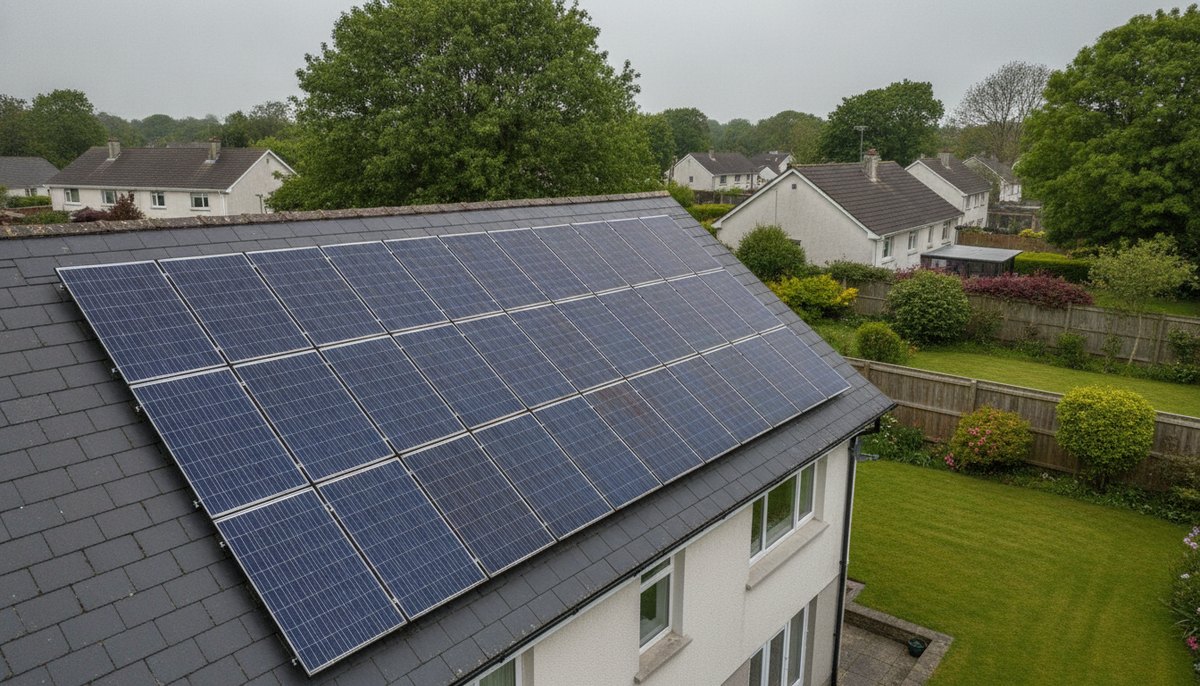
Flogas pays 18.5c per kWh (excluding VAT) for surplus solar electricity exported to the grid under the Clean Export Guarantee. That puts it level with Bord Gáis Energy, Energia and Pinergy, and a single cent below Electric Ireland and SSE Airtricity, who are joint best among open standard rates at 19.5c. Pinergy used to lead the market on 25c; it cut to 18.5c on 1 August 2026, which pulled the top of the standard market down to 19.5c. Flogas credits export payments every two months, and the rate applies to Flogas electricity customers with a registered microgeneration device and a smart meter. As a dual-fuel supplier, Flogas suits households that already buy both their gas and electricity from it — but the export rate alone is mid-table, so the right way to judge it is on the whole plan, not the export number on its own.
- Export rate: 18.5c per kWh excluding VAT (20c including VAT at 9%), effective since 6 November 2023
- Who qualifies: Flogas electricity customers with a registered microgeneration device (solar PV, micro-wind, micro-hydro or micro-CHP) who meet the renewables self-consumer definition
- Smart meter: Required for metered export; deemed export applies where a smart meter cannot yet be installed
- How paid: Credit on your account, applied every two months, with a statement showing the export, rate and whether it is metered or deemed
- Rate changes: Flogas gives 30 days' notice by email or letter before the rate changes
- Tax: First €400/year of export income is exempt from income tax until 31 December 2028 (Budget 2027 announced a rise to €600)
Flogas's 18.5c Export Rate Explained
Flogas quotes its domestic Clean Export Guarantee rate as 18.5c per kWh excluding VAT, which works out at 20c per kWh including VAT at the 9% rate. The 18.5c figure is the one used in published supplier comparisons, because export payments to domestic microgenerators are handled net of VAT — so 18.5c is the number that effectively drives your export earning. The rate has been in place since 6 November 2023.
At 18.5c, Flogas sits in the middle of a market that is now tightly packed. It is level with Bord Gáis Energy, Energia and Pinergy, a single cent below Electric Ireland and SSE Airtricity's joint-best 19.5c, and above Yuno Energy at 17.16c and PrePayPower at 15.89c. Every open standard rate in Ireland now sits inside a 3.6c band, so the export rate on its own no longer separates suppliers the way it did when Pinergy paid 25c.
The rate is variable. Flogas commits to giving 30 days' notice by email or letter before any change takes effect. Because your export supplier does not have to be the same company that physically connects you to the grid, you can register your Clean Export Guarantee with another supplier if Flogas's rate ever drops below what suits you.
How Flogas's Rate Compares
On openly-available standard rates, Flogas is mid-table. Several suppliers pay more, and only the lowest open rates pay less.
| Supplier | CEG Rate | Notes |
|---|---|---|
| SSE Airtricity / Electric Ireland | 19.5c/kWh | Joint best open standard rate; level on the same figure |
| Flogas / Bord Gáis Energy / Energia / Pinergy | 18.5c/kWh | Four suppliers level; Pinergy joined them when it cut from 25c on 1 August 2026. Flogas pays every two months |
| Yuno Energy | 17.16c/kWh | Raised from 15.89c in July 2026 |
| PrePayPower (standard) | 15.89c/kWh | Lowest open standard rate tracked; quoted including VAT |
Rates as of 12 September 2026 from supplier pages and published trackers. Rates are variable and subject to change; check supplier websites before switching. Full comparison: CEG rates in Ireland.
On a typical 4 kWp system that exports around 1,500 kWh per year, Flogas's 18.5c rate earns roughly €278 per year. The same export on the best open standard rate, 19.5c from Electric Ireland or SSE Airtricity, earns about €293, and on the lowest 15.89c rate about €238 — so switching from Flogas's rate to the top of the market is worth roughly €15 a year, while dropping to the bottom would cost about €40. Before 1 August 2026 that move to the top was worth about €97 a year, because Pinergy paid 25c; that option is gone. The trade-off is that to be paid Flogas's rate you must also import your electricity from Flogas, so judge it on the whole plan — import unit rate, standing charge and export rate together — not the export number alone.
How and When Flogas Pays You
Once your NC6 form is processed and your smart meter is installed, ESB Networks passes your export readings to Flogas. You do not trigger this manually — registration flows through from the NC6. From there, a credit at 18.5c per kWh is applied to your account for the units you exported.
A few practical details:
- Paid every two months: Flogas applies the export payment as a credit on your account on a bi-monthly basis, with a statement showing the export, the rate, and whether the credit is based on a metered or deemed calculation
- Metered or deemed: With a smart meter you are paid for every kWh recorded as exported. Without one, Flogas uses a deemed calculation — it estimates 357 kWh fed back to the grid per year for every 1.2 kW of panel capacity
- Variable rate, 30 days' notice: The 18.5c rate can change, but Flogas must notify you by email or letter 30 days before the effective date. If it drops, you can register your CEG with another supplier without moving your import account
- Switching: You can change electricity supplier at any time; your new supplier must also offer a CEG rate, so compare export rates as part of any switch
Who Qualifies for Flogas's Microgeneration Payment
Flogas can only pay its export rate to its own electricity customers. If you export to the grid but import from Electric Ireland, Energia or anyone else, you register for the Clean Export Guarantee with that supplier instead. Flogas is the supplier; ESB Networks runs the physical grid and the metering — two separate organisations, even though both touch your export payment.
Beyond being a Flogas electricity customer, you need:
- To meet the renewables self-consumer definition — in plain terms, you generate renewable electricity mainly for your own use and export the surplus
- A registered microgeneration device — solar PV, micro-wind, micro-hydro or micro-CHP. Most homeowners have solar PV
- An NC6 form submitted to ESB Networks, normally done by your installer at the time of installation, so your system is registered in the Central Market Systems
- A smart meter where technically possible, to record your metered export. If a smart meter cannot be installed, Flogas applies its deemed-export calculation instead
Flogas as a Dual-Fuel Supplier
Flogas is one of the few Irish suppliers offering both gas and electricity, which is its main draw for solar households. If you already buy your gas from Flogas and you have solar panels, keeping both fuels with one supplier and collecting the 18.5c export credit can simplify your billing. But convenience is not the same as value — the export rate is only mid-market, so it is worth checking whether a higher export rate elsewhere, or a cheaper import plan, would leave you better off overall.
If you are starting from scratch with solar, the supplier you export to is a separate decision from who installs the panels. The SEAI solar PV grant is the same whoever fits the system, and comparing installers on price and system design usually saves more than any single supplier's export rate. Get more than one installer quote before you commit.
Tax on Flogas Export Income
Microgeneration export income is taxable in Ireland, but the first €400 per year is exempt under a Revenue disregard that runs until 31 December 2028. Budget 2027 announced a rise to €600, with the start date to be set in Finance Bill 2026. On Flogas's 18.5c rate, a typical 3–5 kWp system exporting 1,000–1,500 kWh a year earns roughly €185–€278, which sits comfortably inside the threshold — so no tax is due and there is nothing to declare for it.
A larger system, or one with a big battery and high summer surplus, can clear the €400 threshold. Income above €400 is declared on your annual tax return and taxed at your marginal rate, with USC and PRSI potentially applying to the excess. The exemption is per individual, not per device. For the full breakdown, see our guide to tax on solar export income in Ireland.
How to Start Receiving CEG Payments from Flogas
If you are already a Flogas electricity customer with solar panels and a registered NC6 form, you may already be set up — check recent statements for a microgeneration or export credit line. If you have panels but no credit has appeared after a billing cycle, contact Flogas to confirm your microgeneration registration is active.
If you are planning a new solar installation:
- Choose an SEAI-registered installer. They submit the NC6 form to ESB Networks as part of the job
- ESB Networks processes the form and arranges a smart meter where needed
- Register your microgeneration with your chosen electricity supplier (you will need your MPRN and NC6 confirmation), and credits begin once export data flows through
- Apply for the SEAI solar PV grant through your installer at the same time — it is separate from, and stacks with, your export payments
We connect you with SEAI-registered solar installers in your area. They handle the NC6 form, the grant paperwork, and the smart meter registration — so export payments begin as quickly as possible. Free, no obligation.
Get a Solar Quote →Frequently Asked Questions
Flogas pays 18.5c per kWh excluding VAT (20c including VAT at 9%) for surplus solar electricity exported to the grid under the Clean Export Guarantee, a rate in place since 6 November 2023. It is credited every two months, and Flogas gives 30 days' notice before the rate changes.
Flogas's 18.5c is mid-table. It is level with Bord Gáis Energy, Energia and Pinergy, and a single cent below Electric Ireland and SSE Airtricity, joint best among open standard rates at 19.5c. Pinergy led the market on 25c until it cut to 18.5c on 1 August 2026. Flogas sits above Yuno Energy at 17.16c and PrePayPower at 15.89c. Because export payments are only part of your bill, compare the full plan rather than the export rate alone.
Flogas applies export credits to your account every two months, with a statement showing the units exported, the rate, and whether the credit is based on a metered reading or a deemed calculation. That is less frequent than Pinergy's monthly credit but more frequent than the twice-a-year payments from Yuno Energy and PrePayPower.
For a typical 4 kWp system exporting roughly 1,500 kWh a year, Flogas's 18.5c rate works out at about €278 per year — around €15 less than the best open standard rate of 19.5c and about €40 more than the lowest 15.89c rate. A smaller 3 kWp system exporting about 1,000 kWh would earn roughly €185. Both sit within the €400 tax-free threshold.
Yes. Flogas can only pay its export rate to its own electricity customers, so you need to import your electricity from Flogas as well as export to it. If your import supplier is someone else, you register for the Clean Export Guarantee with that supplier instead. Flogas is also a dual-fuel supplier, so households buying gas and electricity together sometimes keep both with Flogas — but compare the whole plan, not just the export number.
If a smart meter cannot be installed, Flogas pays you using a deemed-export calculation instead of metered readings. It estimates 357 kWh fed back to the grid per year for every 1.2 kW of installed panel capacity. Metered export is usually better for a well-sized system, and since 1 January 2025 you can lose export payments if you decline a smart meter ESB Networks offers — so take the smart meter where you can.
The first €400 of microgeneration export income per year is exempt from income tax until 31 December 2028. Budget 2027 announced a rise to €600, with the start date to be set in Finance Bill 2026. On a typical home system almost all homeowners earn less than this on Flogas's 18.5c rate, so no tax is due. Income above €400 is taxable at your marginal rate and must be declared on your annual return. See our solar export income tax guide.
Sources: Flogas — Micro-generation (18.5c excl. VAT / 20c incl. VAT export rate effective 6 November 2023, bi-monthly credit, 30 days' notice, NC6, smart-meter and deemed-export calculation of 357 kWh per 1.2 kW); SolarQuotes Ireland — CEG Rate Comparison and published feed-in tariff trackers (competitor standard rates as of 12 September 2026); Revenue.ie — Exemption of certain profits from microgeneration of electricity (€400 tax disregard to 31 December 2028). Rates verified against the Flogas help centre on 20 June 2026. Competitor rates re-checked on 12 September 2026 after Pinergy cut its Clean Export Guarantee rate from 25c to 18.5c per kWh ex VAT on 1 August 2026 (pinergy.ie) and Yuno Energy raised its rate from 15.89c to 17.16c; Electric Ireland's 19.5c confirmed on electricireland.ie.
Published: 20 June 2026. Updated: 12 September 2026. Author: Neil Russell.