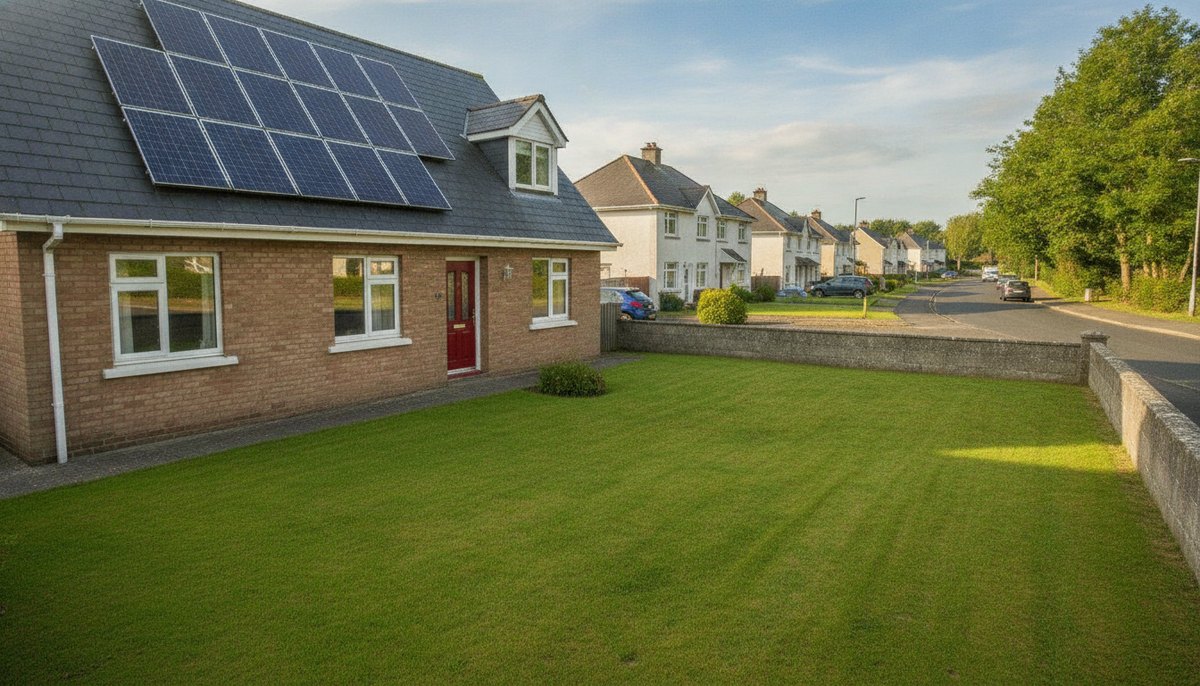
SSE Airtricity pays 19.5c per kWh for surplus solar electricity exported to the grid on its standard Clean Export Guarantee tariff. That is the joint best open standard rate in Ireland, level with Electric Ireland and a cent above Bord Gáis Energy, Energia, Flogas and Pinergy (all 18.5c). SSE Airtricity did not move its rate to get there: Pinergy held the top standard rate at 25c until it cut to 18.5c on 1 August 2026. There is also a restricted premium route — 32c/kWh in Year 1 and 27c/kWh in Year 2 — but only for homeowners who install through a qualifying Activ8 partner, and it runs for two years before reverting to the standard rate. The standard rate applies to SSE Airtricity electricity customers who have a registered microgeneration device and a smart meter installed, and arrives as a credit on your bill. The export rate is unaffected by SSE's electricity and gas price increase on 5 October 2026, which raises day and peak import rates by 11%.
- Standard rate: 19.5c per kWh (variable — can change with notice)
- Premium rate: 32c/kWh Year 1, 27c/kWh Year 2 onward — restricted to qualifying Activ8 installations only
- Who qualifies: SSE Airtricity electricity customers with a registered microgeneration device (solar PV, micro-wind, micro-hydro, or micro-CHP)
- Smart meter: Required for metered export. ESB Networks arranges one after your NC6 form is processed; deemed export applies where a smart meter cannot be fitted
- How paid: Credit on your electricity bill
- Tax: First €400/year is exempt from income tax until end of 2028
SSE Airtricity's Two Rates: Standard vs Activ8 Premium
SSE Airtricity is unusual in the Irish market because it has two very different export rates, and which one you can get depends entirely on how your solar system was installed.
The standard rate is 19.5c/kWh. This is the Clean Export Guarantee rate any SSE Airtricity electricity customer can register for once they have solar panels and a smart meter — no installer conditions attached.
The premium rate is 32c/kWh in Year 1, dropping to 27c/kWh from Year 2. This is the headline figure you will see quoted as the “highest export rate in Ireland”, but it is restricted: it is linked to qualifying solar or battery installations carried out through Activ8 Energies, SSE Airtricity's installation partner. If you did not install through that route, you cannot switch onto the 32c rate simply by moving your electricity account to SSE Airtricity. For most homeowners comparing suppliers after the fact, the relevant SSE Airtricity number is the standard 19.5c.
How SSE Airtricity's Rate Compares
On the standard tariff, SSE Airtricity is joint top of a market that now spans 15.89c to 19.5c for openly-available rates, with the restricted Activ8 premium sitting above the lot at 32c. The open market used to run to 25c; Pinergy's cut on 1 August 2026 compressed it into a 3.6c band, which is worth about €15 a year on a typical export volume from top to middle.
| Supplier | CEG Rate | Notes |
|---|---|---|
| SSE Airtricity (Activ8 premium) | 32c Y1 / 27c Y2 | Restricted — must install through a qualifying Activ8 partner; two-year term, then reverts to the standard rate; not an open switch-in rate |
| SSE Airtricity (standard) | 19.5c/kWh | Joint best open standard rate; current as of September 2026; variable |
| Electric Ireland | 19.5c/kWh | Joint best; same as SSE Airtricity's standard rate |
| Pinergy | 18.5c/kWh | Cut from 25c ex VAT on 1 August 2026; paid monthly; no installer restriction |
| Bord Gáis Energy / Energia / Flogas | 18.5c/kWh | Three suppliers level with Pinergy on the same rate |
| Yuno Energy | 17.16c/kWh | Raised from 15.89c in July 2026 |
| PrepayPower | 15.89c/kWh | Lowest tracked standard rate; quoted including VAT |
Rates as of 12 September 2026 from supplier pages and published trackers. Community Power is not listed: it does not publish a Clean Export Guarantee rate on its own site, so we have no figure we can stand over. Rates are variable and subject to change; check supplier websites before switching. Full comparison: CEG rates in Ireland.
On a typical 4 kWp system that exports around 1,500 kWh per year, SSE Airtricity's standard 19.5c rate earns you roughly €293 per year. The same export on the 18.5c paid by Pinergy, Bord Gáis Energy, Energia and Flogas earns €278 per year — about €15 less, or €150 over ten years. Until 1 August 2026 the comparison ran the other way and was much bigger: Pinergy paid 25c, worth €375 a year on the same export. Your export supplier does not have to be the same as your import supplier, but with the open market inside a 3.6c band the full electricity plan now matters far more than the export rate.
Who Qualifies for SSE Airtricity's Microgeneration Payment
SSE Airtricity can only pay the export rate to customers who buy their electricity from SSE Airtricity. If you supply surplus to the grid but your import supplier is Electric Ireland, Pinergy, or anyone else, you register for CEG with that supplier instead. SSE Airtricity is a supplier; ESB Networks runs the physical grid and the metering — the two are separate organisations even though both touch your export payment.
Beyond being an SSE Airtricity electricity customer, you need:
- A registered microgeneration device — solar PV, micro-wind, micro-hydro, or micro-CHP. Most homeowners have solar PV
- An NC6 form submitted to ESB Networks, normally done by your installer at the time of installation
- A smart meter installed where technically possible. Where a smart meter cannot be fitted, SSE Airtricity pays using a deemed export estimate instead
How and When SSE Airtricity Pays You
Once your NC6 form is processed and your smart meter is installed, ESB Networks passes your export readings to SSE Airtricity. You don't trigger this manually — the registration flows through from the NC6. From there, a CEG credit is applied to your electricity bill, reflecting the kWh you exported in that period at the 19.5c standard rate (or your Activ8 premium rate if you qualify).
A few practical details:
- Bill credit, not cash: The payment normally appears as a credit reducing your electricity bill rather than a separate bank transfer
- Viewing your export: You can check exported units through your ESB Networks online account, which holds the half-hourly export data your supplier is billed from
- Variable rate: The 19.5c standard rate can change. SSE Airtricity must notify you before any change takes effect, and if it drops you can register CEG with another supplier without switching your import account
- Switching: You can change electricity supplier at any time; your new supplier must also offer a CEG rate, so compare export rates as part of the switch
Tax on SSE Airtricity CEG Payments
Microgeneration export income is taxable in Ireland, but the first €400 per year is exempt under a Revenue disregard that runs until the end of 2028. For most homeowners with a standard 3–5 kWp system on the 19.5c standard rate, annual export income lands below or near that threshold, so no tax is due and there is no need to file a return for it. Income above €400 is declared on your annual tax return and taxed at your marginal rate, with USC and PRSI potentially applying to the excess.
The €400 exemption applies per individual, not per device, and it is one of the reasons the restricted 32c Activ8 rate is worth thinking about carefully: a system earning enough to clear €400 on a premium rate will have a taxable slice the standard-rate equivalent might not. For the full breakdown, see our guide to tax on solar export income in Ireland.
How to Start Receiving CEG Payments from SSE Airtricity
If you are already an SSE Airtricity electricity customer with solar panels and a registered NC6 form, you may already be set up — check recent bills for a microgeneration or export credit line. If you have panels but no credit has appeared after a couple of billing periods, contact SSE Airtricity to confirm your microgeneration registration is active.
If you are planning a new solar installation:
- Choose an SEAI-registered installer. They submit the NC6 form to ESB Networks as part of the job
- ESB Networks processes the form and arranges a smart meter where needed
- Register your microgeneration with SSE Airtricity (you will need your MPRN and NC6 confirmation), and credits begin once export data flows through
- Apply for the SEAI solar PV grant through your installer at the same time — it is separate from, and stacks with, your export payments
We connect you with SEAI-registered solar installers in your area. They handle the NC6 form, the grant paperwork, and the smart meter registration — so export payments begin as quickly as possible. Free, no obligation.
Get Free Solar Quotes →Frequently Asked Questions
SSE Airtricity's standard Clean Export Guarantee (CEG) rate is 19.5c per kWh as of 12 September 2026, joint best among rates open to any solar homeowner. A restricted premium rate of 32c/kWh in Year 1 and 27c/kWh in Year 2 is available only to homeowners who install through a qualifying Activ8 partner, and runs for two years before reverting to the standard rate. Both rates are variable and can change with notice.
No. The 32c/kWh (Year 1) Activ8 premium rate is tied to qualifying solar or battery installations carried out through Activ8 Energies, SSE Airtricity's installation partner. You cannot move onto it simply by switching your electricity account to SSE Airtricity. If you install through another route, the rate available to you is the standard 19.5c/kWh.
For a typical 4 kWp system exporting roughly 1,500 kWh a year, the standard 19.5c rate works out at about €293 per year. A larger 6 kWp system exporting around 2,000 kWh would earn approximately €390/year at the same rate. Most standard-rate homeowners stay within the €400 tax-free threshold.
Yes. SSE Airtricity can only pay its export rate to its own electricity customers. If your import supplier is someone else, you register for CEG with that supplier instead. You do not have to switch your import account to access a different CEG rate — your export supplier can differ from your import supplier.
Yes, on both counts since 1 August 2026. Its restricted Activ8 premium route pays the highest headline rate in Ireland at 32c/kWh in Year 1 and 27c in Year 2, and its openly-available standard rate of 19.5c/kWh is joint best with Electric Ireland. Pinergy used to beat both open rates at 25c; it cut to 18.5c on 1 August 2026, so homeowners not installing through Activ8 no longer have a higher option. See the full CEG rate comparison.
The first €400 of microgeneration export income per year is exempt from income tax until the end of 2028. Most standard-rate homeowners earn less than this, so no tax is due. Income above €400 is taxable at your marginal rate and must be declared on your annual return. See our solar export income tax guide.
Sources: SSE Airtricity — Microgeneration help centre (CEG rate, eligibility, metered vs deemed export, payment as bill credit, NC6 process); SolarQuotes Ireland — CEG Rate Comparison (standard 19.5c and Activ8 32c/27c premium, competitor rates as of 12 September 2026); Revenue.ie — Exemption of certain profits from microgeneration of electricity (€400 tax disregard to end of 2028). Rates verified against supplier and published trackers on 17 June 2026 and re-checked on 12 September 2026, after Pinergy cut its Clean Export Guarantee rate from 25c to 18.5c per kWh ex VAT on 1 August 2026 (pinergy.ie) and Yuno Energy raised its rate from 15.89c to 17.16c; Electric Ireland's 19.5c confirmed on electricireland.ie.
Published: 17 June 2026. Updated: 12 September 2026. Author: Neil Russell.